Food is not only nourishment it is storytelling, identity, and community. Around the world, people crave experiences that transport them beyond daily life, and one of the most powerful ways to travel without leaving your table is through cuisine.
For many, Turkish dishes are among the most fascinating. They combine rich history, vibrant flavors, and cultural heritage, all woven into plates that invite people to share, celebrate, and connect. For those seeking to explore more about this theme, it is highly recommended to learn about ghostwriter dissertation.
But with so many famous Turkish dishes, knowing where to begin can feel overwhelming. Which Turkish dish best captures the essence of the cuisine? Which Turkish dish names should you look for on a menu to ensure an authentic experience? And most importantly, where can you taste them outside of Turkey?
At Hatay Turkish Restaurant, these questions are answered with authenticity. Each dish is prepared with heritage recipes, fresh ingredients, and a dedication to tradition. This article explores Turkish dishes in depth: their history, variety, and cultural significance.
Whether you’re new to Turkish cuisine or looking to expand your knowledge, this guide will bring the culture of Turkey right to your table.
The Deep Cultural Roots of Turkish Dishes
Turkish cuisine stands at the crossroads of Europe, Asia, and the Middle East, reflecting centuries of trade, empire, and migration.
It developed under the Ottoman Empire, which lasted over 600 years and influenced three continents. Because of this, every Turkish dish tells a story of exchange, Persian spices, Arab techniques, Balkan meats, and Mediterranean freshness all blended into one.
Unlike many cuisines that emphasize either meat or vegetables, Turkish food balances both. Olive oil, yogurt, herbs, grains, and legumes form the base, while meat often lamb, chicken, or beef is seasoned carefully with regional spices.
Turkish dishes also reflect hospitality, a value central to Turkish culture. Meals are not just eaten; they are shared. Large platters, small meze plates, and warm bread invite people to connect over the table.
This explains why Turkish cuisine has become one of the world’s most celebrated culinary traditions. UNESCO even recognizes Turkish coffee as part of the world’s intangible cultural heritage, underscoring the importance of food as a cultural practice, not just a meal.
Famous Turkish Dishes That Everyone Should Try
Some Turkish dishes have achieved global recognition. These are often the starting point for newcomers, but they also remain favorites for locals who value tradition.
Kebabs: The Iconic Turkish Dish
The kebab is perhaps the most famous Turkish dish worldwide. But in Turkey, kebabs are not one single recipe. Each region has its own take.
- Adana Kebab: Spicy minced lamb grilled on skewers, named after the city of Adana.
- Iskender Kebab: Slices of doner meat served over bread, topped with tomato sauce and yogurt.
- Shish Kebab: Marinated chunks of meat grilled on skewers, often with vegetables.
At Hatay Turkish Restaurant, kebabs are a specialty, prepared in authentic styles that bring Turkey’s grill culture to Dubai.
Meze: A Tradition of Sharing
Meze are small plates served before the main course, similar to Spanish tapas. These include dips, salads, and cold appetizers such as hummus, baba ghanoush, and ezme (a spicy tomato and pepper salad). The beauty of meze lies in variety and sharing they embody the Turkish value of hospitality.
Pide: The Beloved Turkish Flatbread
Often called Turkish pizza, pide is a boat-shaped flatbread topped with cheese, minced meat, spinach, or sucuk (Turkish sausage). Unlike Western pizza, pide uses fewer toppings, letting the dough and olive oil shine. Fresh from a wood oven, it is one of the best Turkish dishes for casual dining.
Baklava: Sweet Layers of History
Baklava is a dessert layered with filo pastry, nuts, and syrup. Although versions exist across the Middle East, Turkish baklava stands out for its delicate layers and balance of sweetness. In Turkey, it is often served on special occasions and holidays.
Turkish Tea and Coffee: Cultural Rituals
No Turkish meal is complete without tea or coffee. Turkish tea is served in tulip-shaped glasses, always offered to guests as a sign of welcome. Turkish coffee, prepared unfiltered in a cezve (small pot), is strong and thick, often enjoyed with a piece of Turkish delight. It is not only a drink but a centuries-old ritual.
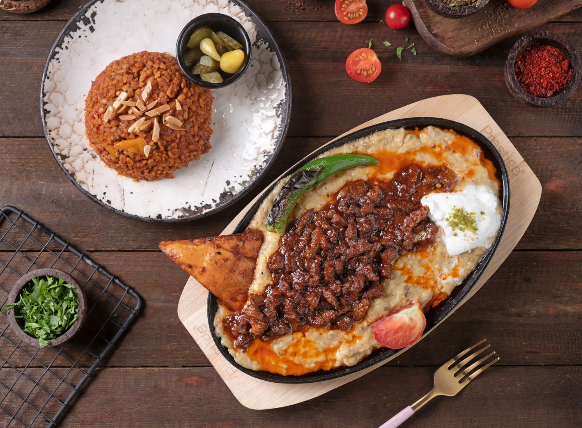
Regional Turkish Dish Names: Diversity on a Plate
Turkey’s geography creates an incredible variety in food. Each region has its specialties, offering different textures and flavors.
Hatay Cuisine: A Blend of Cultures
The Hatay region, bordering Syria and the Mediterranean, is one of Turkey’s richest culinary hubs. It blends Middle Eastern spices with Mediterranean ingredients. Unique features include:
- Use of pomegranate molasses in savory dishes.
- Heavy reliance on fresh herbs and olive oil.
- The signature dessert is künefe a pastry made with shredded dough, filled with cheese, and soaked in syrup.
These specialties are highlighted, offering diners a true taste of the region.
Aegean Cuisine: Fresh and Light
The Aegean coast emphasizes vegetables, olive oil, and seafood. Dishes like grilled fish, artichokes in olive oil, and herb-filled pastries dominate the menus. This is one of the healthiest regional diets in Turkey.
Anatolian Cuisine: Hearty and Traditional
Central Anatolia favors hearty stews, bread, and legumes. Famous dishes include manti (Turkish dumplings filled with meat, topped with yogurt and garlic sauce) and etli ekmek (flatbread with minced meat).
Black Sea Cuisine: Corn and Anchovies
Along the Black Sea, corn replaces wheat in many dishes. Anchovies are central, appearing in stews, rice dishes, and even bread. This region also features the famous kuymak, a melted cheese and cornmeal dish.
Why Turkish Cuisine Is Loved Worldwide
The international appeal of Turkish dishes lies in their balance. They are rich but not heavy, flavorful but not overwhelming. Spices are used to enhance, not overpower. Moreover, Turkish cuisine emphasizes fresh, seasonal ingredients, making it adaptable to global tastes.
Cultural experts note that cuisines rooted in hospitality tend to thrive abroad because they are not just about taste but about experience. Turkish food, with its shared platters, warm breads, and tea rituals, fosters connection something diners worldwide crave.
This is why Turkish restaurants, especially authentic ones like Hatay Turkish Restaurant, have grown in popularity. They do not simply serve food; they invite guests to join a tradition.
How to Enjoy Authentic Turkish Dishes in Dubai
Dubai is home to many international cuisines, but finding an authentic Turkish dish on a menu can be challenging. Hatay Turkish Restaurant stands out because it remains faithful to tradition, with chefs specializing in Hatay-style cooking and classic Turkish favorites.
Whether you are looking for the best Turkish dishes for a family gathering or a cultural dining experience with friends, Hatay offers both. Guests can enjoy rich kebabs, fresh meze, or sweet künefe while experiencing Turkish hospitality in the heart of Dubai.
For reservations or inquiries, you may reach out via email at Infoo@hatayturkishrestaurant.com, call us at +971 50 503 1447, or contact us directly.
FAQs About Turkish Dishes
What Are Some Lesser-Known Turkish Dishes Worth Trying?
Beyond the famous dishes, try imam bayıldı (stuffed eggplant with olive oil and tomatoes), mercimek köftesi (lentil patties), or çoban salatası (shepherd’s salad). These are flavorful, vegetarian-friendly, and showcase the depth of Turkish cuisine.
How Do Turkish Dishes Compare to Middle Eastern Cuisine?
While Turkish and Middle Eastern cuisines share similarities, Turkish food often uses more olive oil, fresh herbs, and dairy like yogurt. It also has a stronger bread culture, with varieties such as pide, simit, and lavash accompanying nearly every meal.
What Role Does Bread Play in Turkish Dishes?
Bread is central to Turkish cuisine. It is eaten at breakfast, lunch, and dinner. From simit to pide, bread often accompanies meze, soups, and kebabs. Many Turkish dishes are designed to be eaten with bread rather than cutlery.
Are Turkish Desserts Always Sweet?
Most Turkish desserts are sweet, featuring syrup, honey, or sugar. However, sweetness is often balanced with nuts, cheese (in künefe), or spices. This makes them rich but not overly heavy, perfect after a savory meal.
Can Turkish Dishes Be Paired With Modern Diets?
Yes. Many Turkish dishes fit well into modern diets, such as Mediterranean or vegetarian diets. Dishes like grilled fish, lentil soups, and olive oil-based vegetables align with healthy eating, while desserts and meat-heavy meals can be enjoyed in moderation.